Category Archives: College Ideas

Reviving the Lost Art of Reading in the Digital Age

Reading books in an era dominated by digital media is more critical than ever. Here are some reasons discussing the importance of it:

1. Enhanced Cognitive Skills: Books are a rich source of information, filled with intricate narratives and comprehensive descriptions that stimulate mental imagery and encourage critical thinking.

2. Improved Concentration and Focus: Unlike digital media, reading books requires long, uninterrupted periods of focus and concentration, helping enhancing these abilities.

3. Better Memory Retention: Books exercise the brain’s recall function as readers must remember a variety of characters, backgrounds, and plots.

4. Reduced Stress: Reading books can be therapeutic. Studies have shown that reading reduces stress levels significantly, helps in better sleep and even increases lifespan.

5. Increased Empathy: By introducing readers to diverse perspectives, books promote empathy and understanding towards others.

6. Preservation of Culture and History: Books serve as tangible artifacts preserving culture, history, and knowledge that might be lost in the fleeting digital noise.

But that doesn’t mean you should shun digital media completely. Here are a few tips on how to combine traditional reading with modern learning setups:

1. Ebooks and Audiobooks: If you’re struggling to fit reading time into a busy schedule or prefer a digital interface, try ebooks and audiobooks. They provide the same benefits as physical books and allow for adjusting type size, highlighting, bookmarking, and note-taking.

2. Online Book Clubs and Discussions: Join online book clubs or discussion forums. They are excellent places to debate interpretations, share insights, and get recommendations.

3. Utilize Educational Apps: Many apps cater to different reading levels or subjects. These can be a great tool in supplementing learning and encouraging reading.

4. Blended Learning: Use digital media to enhance what you learn from books. If a book references a certain piece of art, history, or science, take a moment to look it up and delve deeper into the topic.

5. Screen Management: Make use of digital tools which offer features like blue-light reduction or setting reading mode to reduce the strain caused by digital screens.

6. Schedule Reading Time: Designate time each day for uninterrupted reading, whether from a physical book or a digital device.

7. Use eBooks for Travel: To save space and weight when travelling, eBooks are a practical solution.

Thus, balancing both traditional reading and modern learning can yield optimal results by reaping the benefits from both approaches. It’s all about finding the right balance that works for an individual’s learning style and needs.

Mastering Flexibility: Learning Adaptability Skills in the Remote Learning Era

Adaptability is especially crucial during remote learning in college due to the unforeseen circumstances and variations in learning styles. Online learning is significantly different from traditional classroom learning, and it involves various changes in terms of self-discipline, time management, learning environment, teacher-student interaction, peer interaction, and more. Thus, to excel in this new environment, students should be able to adapt effectively.

Adaptability is important for the following reasons:

1. Online learning norms: Remote learning means being flexible to different learning environments and needs to get adjusted to new norms of learning such as online discussions, assignments, and tests.

2. Broadening digital skills: Learning tools used for remote education are likely to vary, and students should be adaptable enough to learn how to use them.

3. Self-management: In-person classes often provide structure. With online classes, students have to manage their time and routines effectively.

4. Cultural diversity: Online learning frequently involves interacting with peers from different parts of the world. Being adaptable can help students learn from diverse cultures and perspectives.

Tips to Mastering Adaptability:

1. Be open-minded: Be ready to embrace new technologies, platforms, and methods of study.

2. Develop digital competence: Develop the skills necessary to use different learning platforms and digital tools effectively.

3. Self-discipline: Create a study plan and stick to it. Incorporate a balanced schedule incorporating study time, leisure activities, and relaxation.

4. Stay motivated: Keep your goals in mind and stay motivated to learn and adapt better.

5. Effective communication: Since physical interaction is missing in remote learning, ensure to communicate effectively with professors and peers.

6. Resilience: Build resilience to manage stress and be persistent in your quest for knowledge.

Adapting to a new learning model requires persistent efforts and a positive mindset. College students need to understand the importance of adaptability and work towards building it for successful remote learning.

Harnessing College Experiences: Redefining Success in the Millennial Era

College life is more than just attending classes and passing exams. It is a transformative experience where young individuals explore their potential and develop their capabilities. It serves as a platform to initiate an individual’s path to their career, which is not only governed by academic achievements but also other essential factors such as creativity, leadership, networking, and resilience.

Understanding the intricacies of college life involves developing a balanced approach. It requires focusing on academics while at the same time participating in extracurricular activities and taking on leadership roles. Each of these activities contributes to personal growth, helping students gain a deeper awareness of their strengths, weaknesses, and passions.

Living in an era driven by innovation means that we are witnessing a significant shift in the way success is defined, especially amongst Millennials. Traditional measurements of success, such as earning a high salary or possessing material goods, are now considered only a part of it. There is a growing emphasis on factors like work-life balance, having a positive impact on society, and continuous learning.

Millennials believe they have the power to redefine success. They value creativity and believe that constant innovation is the key to success. Given the rapid technological advancements and the impact of social media, it is unsurprising that Millennials tend to favor professions that allow them to quickly adapt, continually learn, and take on various roles.

Redefining Success in this Context

Success, in the millennial mindset, is a combination of personal satisfaction, financial stability, and positive societal impact. They tend to strive for jobs that fuel their passions and allow flexible schedules more than traditional 9-to-5 jobs.

Additionally, success for millennials often involves social responsibility. They seek careers and companies that value sustainability, equality, and social justice. They resonate with the idea that their work should contribute to making the world a better place.

In the realm of academics, success is no longer just about grading systems. It’s about absorbing knowledge, practical implementation, and interdisciplinary learning.

In conclusion, college life and the millennial concept of success call for a mature, balanced, and dynamic approach. It emphasizes flexibility, social impact, personal satisfaction, and a commitment to lifelong learning — a far-reaching definition that goes beyond a certificate or a paycheck alone.

Navigating College Life in the Digital Age

In the era of technology and AI, traditional college experiences are undergoing a significant transformation. Thinking back on what college was like a few decades ago, the evolution is striking. Learning is no longer restricted to the confines of classrooms and textbooks. The prevalence of online classes, virtual reality-based projects, and AI-assisted studies has expanded the capacities of traditional learning methodologies.

One of the most profound alterations in the college experience is the shift towards virtual classrooms. With AI and technology, students now have the luxury to attend lectures from any corner of the world. This democratized access to education tears down geographical barriers and enables a student sitting in a distant town or country to enroll in their dream course. This digitized approach also persuades students to be self-directed and accountable for their own studies.

Another typical change is the profound influence of technology in the way coursework and projects are designed. Earlier projects often required physical models or presentations. However, with the advent of VR and AI, students are now creating virtual models and simulations. For example, architecture students use technology to design 3D models of buildings instead of physical miniatures.

While traditional college experiences are changing, students can embrace this shift and make the most out of it. First up, leverage the accessibility that technology bestows. With countless resources available online, learning has become simpler than ever. You can subscribe and learn from numerous educational platforms.

Secondly, understand the indispensability of technology in today’s professional world. By familiarizing yourself with tech tools and platforms during your college years, you prepare yourself for future jobs. This involves learning software related to your field of study – like engineers mastering CAD software.

Finally, developing a worldwide network is also crucial. Technology enables students to connect with people from various parts of the world. Engage in collaborative projects or join international forums for discussions and ideas exchange.

While adjusting to these changes might seem overwhelming, remember that there are many resources online to aid you. One such useful guide about online learning and modern education trends is available on HebrewGarden.

In conclusion, the evolution of traditional college experiences towards a tech-driven model is inevitable in this progressive era. Therefore, it becomes essential for students to adapt and make the most of these changes to increase their prospects of a promising professional future.

Exploring the Potential of Virtual Reality in Future Education

Virtual Reality (VR) is a digital technology that simulates immersive and interactive real or imagined environments. The potential of using VR in education is immense as it promises to revolutionize the sector by offering unique methods and environments for learning.

Benefits of VR in Education:

1. Enhancing Visualization: Complex concepts that are difficult to visualize from a 2-dimensional perspective can be better understood using VR. For example, science students can examine complex molecular structures in 3D, walk through virtual ‘cells’ and even perform surgeries in simulated environments.

2. Immersive Learning: VR delivers real or lifelike experiences that keep students intensely engaged in their learning processes. This interactivity can result in higher concentration and retention levels compared to traditional teaching methods.

3. Inclusion and Accessibility: Students with learning disabilities or physical disabilities who may find the traditional classroom setting restrictive could benefit from VR. They can learn at their own pace in an environment adapted to their learning needs.

4. Distance Education: VR technology can transcend geographical barriers, providing quality education to remote areas. Students can join virtual classrooms, conduct science experiments in virtual labs, or explore places worldwide without leaving their homes.

Limitations of VR in Education:

1. Cost: Developing and acquiring VR equipment and content can be expensive. Smaller institutions might find it financially demanding to introduce and maintain this technology.

2. Technical Issues: As a relatively new technology, VR has technical issues that need ironing out. These include issues with motion sickness, eye strain, lack of quality content, and users needing time to familiarize themselves with the equipment.

3. Dependence on Electricity and Internet: VR technology requires constant electricity and high-speed internet services for effective operations. This could be a limitation in regions where access to these amenities is unreliable.

Despite these limitations, the potentials of VR in education are vast. As the technology matures and becomes more affordable, its application could become commonplace in classrooms, providing interactive and immersive learning experiences. Schools could offer virtual field trips, project simulations, and role-playing exercises. In higher education, virtual reality could play a crucial role in medical, engineering, and architecture courses, giving students practical, hands-on experience.

In conclusion, while VR technology is still in its development phase, its benefits far outweigh its challenges. By making learning more engaging, accessible, and fun, VR has the potential to overhaul traditional educational methods and redefine teaching and learning for the 21st century. It will take a collaborative effort among educators, technologists, and policymakers to ensure that this technology is accessible and beneficial to all students.

Making It Through The College Years: Here’s The Help You Need

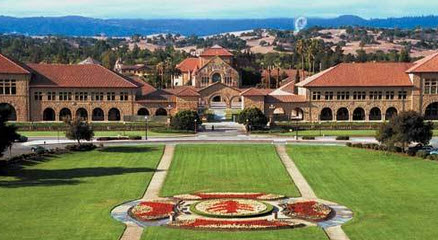
Standford_University_CampusWhen it comes to college, you must face all kinds of different decisions. Your college decisions can often affect the course of your life. Use this advice to help you get through it.

One tip that can help you study in college is to make yourself flash cards when you have an exam coming up. Flash cards are easy to make. Your can buy inexpensive index cards and write questions on one side and answers on the other. You and a classmate can then use them to study together.

You don’t want to find yourself applying for grants and scholarships too late in the game. The more time you devote to securing funding for college, the less money you will need to borrow. Be sure to keep track of deadlines and submit applications on time.

When you are choosing a major, do not simply think about money. You do not want a career in something that you find boring or uninteresting. A good choice is a major that will keep you interested fifty or more hours a week for the rest of your life. Explore your interests.

Buy your school books a couple weeks before the term begins. Spend an hour familiarizing yourself with each of your books. If you have access to your course syllabus, check it out and see where in the book your class will be starting. This way you can get a bit of a head start.

Buy your textbooks second-hand. It can be very costly to buy the books you need for school. If you already have to pay quite a bit for your education, you’re probably wishing to save a few dollars. Look for online retailers and bookstores for used textbooks. Used books are an idea for anyone looking to save a lot of cash.

Don’t focus on your friends back home or a boyfriend or girlfriend in your home town. Chances are you will not stay together through four years of college and you will grow apart. Just enjoy college, meet new people, and feel lucky that you have the opportunity to get away from home to better yourself and branch out.

Student organizations and associations aren’t just about looking good to a prospective employer. Participation can benefit students as well, both emotionally and socially. You’ll find others who share your interests and can explore more of your options on the campus. You might also gain insight into whether or not your chosen major is the best decision.

If you are a woman, consider a STEM major. STEM majors are those that are focused on science, technology, engineering, and math. Since women are less likely than men to choose these fields of study, there are many scholarships and grants available for women. These fields also usually end up being more financially beneficial after graduation.

If you are unsure what you want to major in, concentrate on your general core classes. You will get a feel for each major and be better able to determine which is right for you. If you do not choose early you might have to take more classes than you first expected.

When you first get to college, get a map. You will feel a little silly using the map, but you do need to know where to go, after all. Map out your classes and the cafeteria so that you can easily get around when you first begin. That can make your first days less hectic.

On the first couple of days of class, make sure that you personally introduce yourself to the professor during their office hours. This can go a long way in showing the professor that you are interested in the class, and will also help them to put a face to a name quicker.

Take a break every now and then. If you’re studying 24/7, you’ll inevitably get burnt out. While your folks may not be so quick to agree, it really is necessary to get a break now and then. To remain on top of your game, take it easy.

Practice remembering important details. The most effective way to remember is to first choose to remember, then create a picture in your mind of what you need to remember. Form an association in your mind between things you already know and the new information you need to remember. Repeat the process to make the memory permanent.

Join study groups. Even if you are not having trouble with a class, a study group can help ensure you stay on task and don’t fall behind. It can be easy to fall into the trap of procrastination, and a study group can help provide accountability. In addition, helping others understand the coursework can help it stay fresh in your mind.

If you are continuing your education and have a child, you think living on campus is simply a dream and can’t be done. This isn’t true! Many college campuses have family housing. There are a lot of universities that know that people have children and still need educations. If you need family housing, you must inquire early to be sure of getting a placement.

Understand that when you enter college, you do not have to choose a major immediately. Take a few classes to truly understand what you want to do with the rest of your life before you make this decision. Furthermore, remember that you can always change your major after you select one.

If you are having trouble in a class, don’t procrastinate about asking for help. Most professors have office hours; drop by during this time and tell the professor you need extra help. If your professor has TA’s, you can also ask them for help. Finally, you can hire a tutor through your school’s academic help center.

Everything you’ve just learned should have you feeling confident and comfortable with the upcoming decisions you’ll make. You are constantly faced with important decisions throughout your life, but the ones you face in college have some of the best rewards or worst consequences. Use the knowledge you’ve learned from this article and get the most out of your college experience.

The Best College Advice That Has Ever Been Written

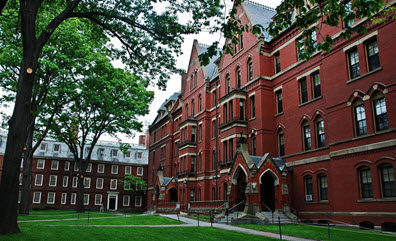
Harvard_UniversityThere are a lot of things you can do to prepare for college, but it will still hold many surprises for you! This article will offer you some sound advice on how to get through classes, campus life and all the other obstacles that you will encounter in your efforts to reach graduation.

Bring a bottle of water to school with you. You need to be hydrated all day. This is particularly important if you’ve got numerous classes back to back. Being hydrated helps you to think clearly and learn more efficiently. You can get more water from water fountains when necessary.

If you want to get an education on a limited budget, consider going to a community college for two years before transferring to a different universities. You will find that community colleges are cheaper than other schools and your credits will transfer as long as you complete your general education before transferring.

It is important to choose your classes wisely. Try to avoid taking a lot of classes that you are going to have to devote a lot of time and attention to all at once. Instead, alternate these harder courses with easier ones to make your semester and college experience a much easier one.

If you are an adult going back to college, try signing up for night classes. The classes during the day time are full of young adults right out of high school. The night classes are usually filled with adults and students who are serious about their education. It will result in a much better college experience.

Do not crack under the stress of selecting or declaring a major right away. Some professors might try and draw you into their department early on, as the more students they have the more job security they have. Never rush major decisions, and do what is right for you, not anyone else.

Take extra writing utensils with you to your tests. There is always a strong possibility that your pencil could break or that your pen could run out of ink while you’re doing your test. Having a backup writing utensil can help you continue your test without being distracted by having to sharpen a pencil or refill a pen.

Make sure you allow yourself breaks when studying. Breaks are important during study sessions. A good rule of thumb for breaks is 10 minutes per each study hour. Develop a schedule and work on adhering to it.

Flash cards are not just a helpful tool for younger children; they can really help you with your college classes as well. In addition to them being a great visual tool for helping you to remember important information, they are also easy for you to carry around wherever you go.

If you need to save money on food, turn your eye to breakfast. There are plenty of options that you can make that are quick, will fill you up and that don”t cost a lot. For example, oatmeal is a great choice. If you are able to save on breakfast and lunch, you may be able to treat yourself to a meal out with friends every now and then.

Use statistics to narrow down your college choices, but not to make the final decision. The right college for you is a good match to you personally, not a prize that you win. Never select a school because a lot of your friends are going there, nor because it holds a number-one position on some published list. Only a visit to the campus can really tell you if it is right.

Get to know the people in the financial aid office. If you make friends with them, they will appear more friendly to you. Then, when you have questions, they can assist you more easily. While they are all professionals, it never hurts to grease the social wheels when it comes to your financial needs.

If you are having trouble making friends on campus, get involved in a club or two. Find any organized activity that you are interested in, and you will automatically be spending time with other students who share at least one of your passions. It can be helpful to have friends who are fellow students but not your immediate classmates.

It might seem impossible for someone with children to live on campus. This is not always true. There are a lot of college campuses that provide family housing. More and more people are choosing to further their education while raising families, and colleges are paying attention. Family housing may be available but it often books up quickly.

Pick up a pair of ear plugs. College campuses and dorm rooms are not always ideal study environments, but you may not have a choice. Ear plugs can help you focus on your studies, even if there is a loud party next door or a pep rally down the street.

When researching the price of a college education, understand that the “sticker price”, or the price the college or university lists is often not what you will pay. You may end up qualifying for school or state financial aid. You also may end up paying extra fees and costs for textbooks and other materials.

Check your book list for each class to see if the texts are mandatory or not. Some professors include a reading list that is optional, and by choosing not to buy the texts you can save money. Often times these books can be borrowed, read online, or simply disregarded because the professor decides not to cover the optional material.

Do your research into different colleges before deciding on one. Make sure that they not only offer the classes you need, but also other areas of interest such as sports, music and activities on campus. Ensuring that the campus you choose is the right fit can make all of the difference in the world.

Preparing for college is so much different than actually going through it; hopefully this article has provided you with plenty of useful advice to help you through it. Stay focused and determined, no matter what comes your way in college and in the end the effort will be well worth it!

Check out the schools with the largest endowments: Harvard, Yale, Standford.